Living in London means learning how to negotiate space. Homes sit close together. Windows are tall, often street-facing, and rarely private by default. Light matters, but so does discretion. And whatever you choose for your windows needs to feel considered, not temporary.
That is where solid panel shutters quietly excel. They offer structure, control, and permanence in a way that curtains and blinds simply do not. Especially in Hackney, where period homes sit alongside converted warehouses and design-led new builds, solid shutters feel less like a trend and more like a natural fit.
London Homes Need More Than Curtains
Curtains soften a room, but they also announce themselves. They hang, they move, they dominate. In urban homes they often feel like a compromise rather than a solution. Blinds, on the other hand, solve one problem while creating another. Practical, yes. Beautiful, rarely.
Solid panel shutters sit somewhere else entirely. They give privacy without heaviness. They allow light without exposure. And when open, they almost disappear into the architecture of the room. In a city where homes work hard all day, that balance matters.
A Brief History of Solid Shutters in London Home Interiors
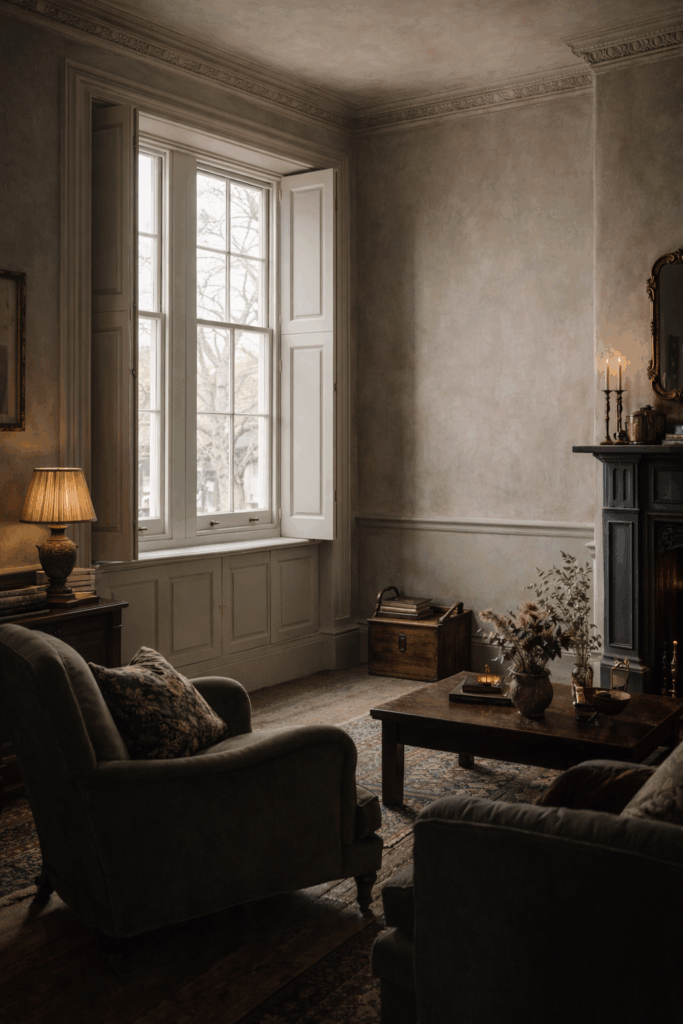
Solid shutters are not a modern invention. They were once a standard feature of London homes, particularly Georgian and Victorian properties. Long before electric lighting or modern glazing, solid shutters were built into window recesses to insulate rooms, block draughts, control light, and provide security at night.
During the day, panels folded neatly back. In the evening, they closed to create warmth and privacy. They were functional, but they were also considered. Proportions mattered. Panels were crafted to suit the scale of tall sash windows. They were part of the building, not an afterthought.
In many London homes, these original shutters were removed over time, often replaced with quicker fixes. Choosing solid shutters today is not about nostalgia. It is about reinstating a solution that was designed specifically for the way London homes work.
Solid Panel Shutters, Quietly Architectural in London
What makes solid panel shutters different is their presence. Or rather, their lack of it.
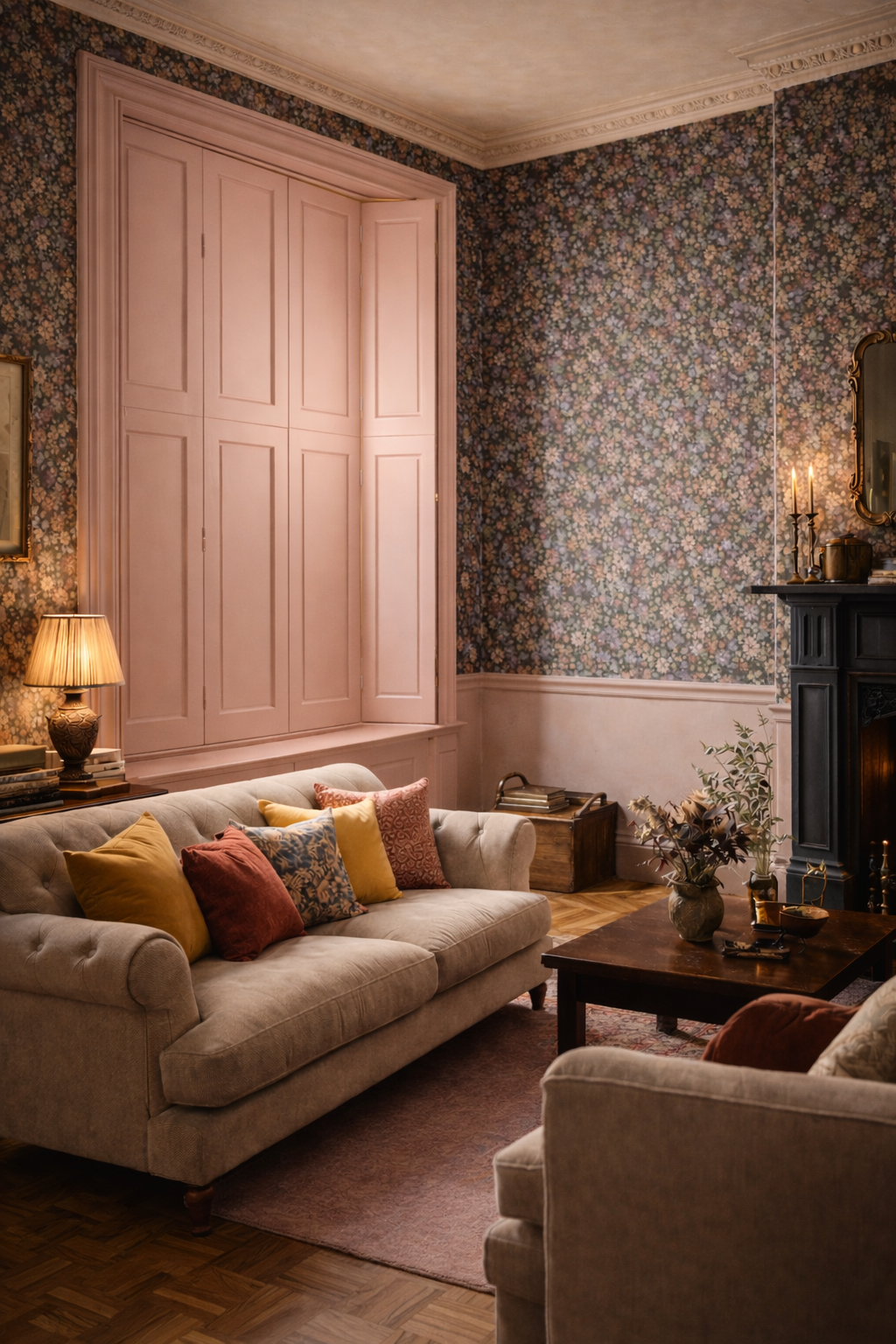
They do not float in front of the window like a fabric layer. They frame it. They feel structural. Closed, they read as clean planes of colour and texture. Open, they sit calmly to the side, revealing the full window without visual clutter.
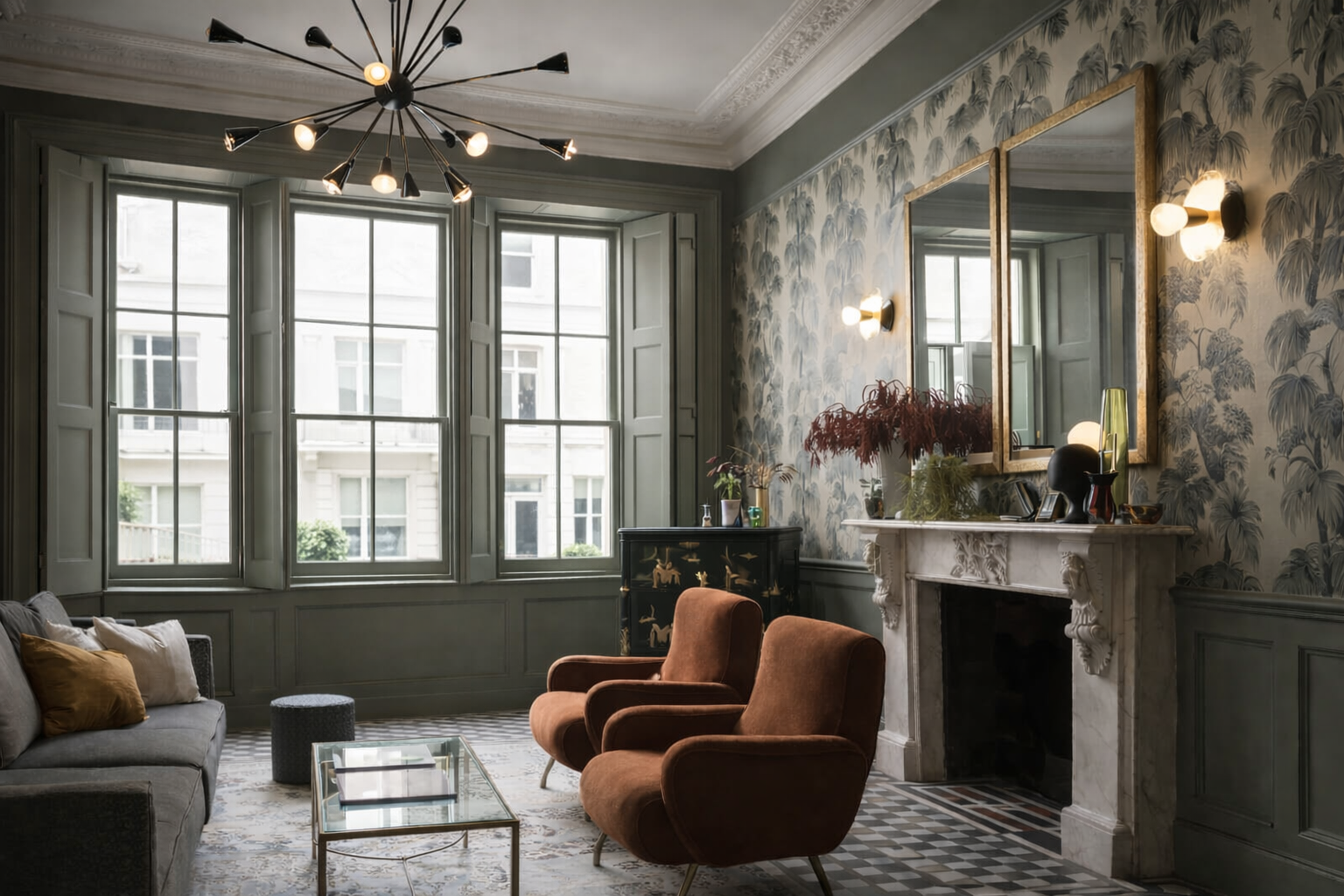
This architectural quality is why solid shutters work equally well in restored period homes and contemporary spaces. They respect original proportions while also suiting modern, pared-back interiors. They do not compete with furniture or finishes. They support them.
Solid Shutters: Light, Privacy, and the Blackout Question
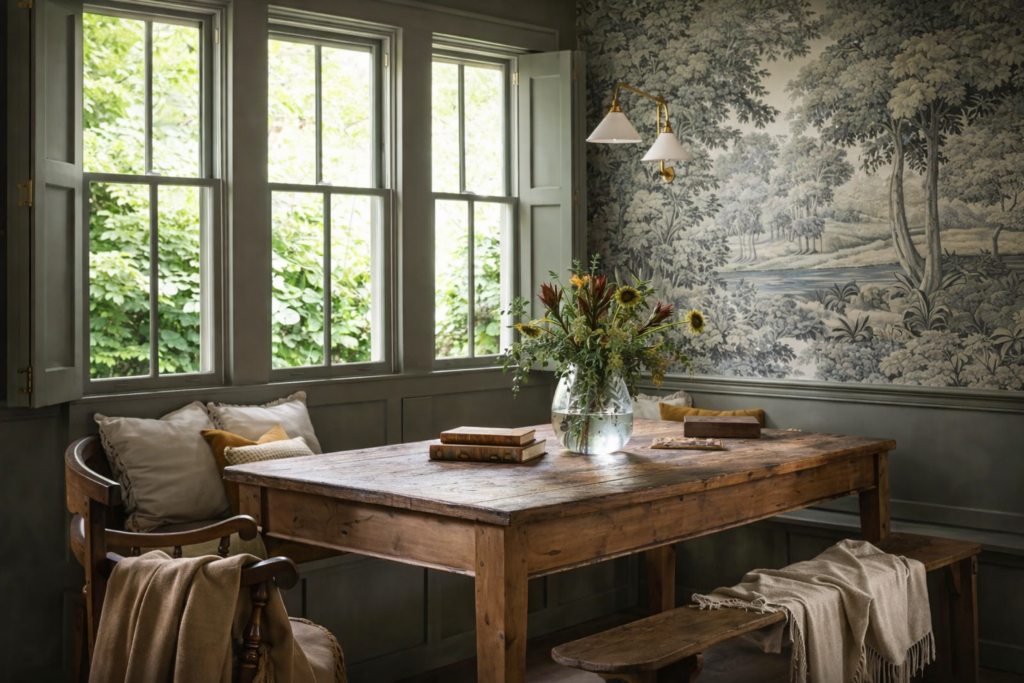
Solid shutters are often associated with darkness, but that misses the point. What they offer is control.
Panels can be configured to allow partial closure, giving privacy at street level while still letting light into the room. In bedrooms, they provide a calm, cocooned feel without the harshness of total blackout. In home offices, they reduce glare without shutting the space down.
For London living, this flexibility is key. Light changes constantly throughout the day. Neighbours are close. Solid shutters allow you to adapt without compromise.
Two Approaches to Solid Shutters: Curated or Fully Bespoke
There is more than one way to approach solid shutters, and the right choice depends on how personal you want the result to be.
Our standard solid shutters are offered in a carefully curated range of classic colours. These are timeless shades chosen to work across a wide range of interiors. Effortless, understated, and quietly confident, they suit homes where simplicity and balance matter.
For those looking for something truly bespoke, our premium solid shutters are handcrafted to your exact specifications. This includes fully custom sizing and an exclusive colour-match service. Shutters can be matched precisely to Farrow and Ball, Little Greene, Lick, or any paint brand you already love.
This level of detail makes a difference, particularly in design-led interiors where colour relationships matter. It allows shutters to blend seamlessly with walls and woodwork, or to create subtle contrast without feeling imposed.
Colour & Texture: What is right choice for a London Home
Colour plays a bigger role in shutters than many people expect. White is not always the answer, especially in London light, which can be cool, changeable, and unforgiving.
Soft blacks, warm off-whites, muted greens, and chalky neutrals often sit more comfortably in urban homes. They add depth without heaviness and age well over time. Matching shutters to wall colour can make a room feel calmer and more resolved. Introducing gentle contrast can add definition without drama.
Solid shutters carry colour differently to paint. Their flat planes and shadow lines give depth and texture, which is why thoughtful colour choice matters.
Solid Shutters: Designed for Hackney Homes
Hackney homes are rarely uniform. Victorian terraces come with tall windows and deep reveals. Warehouse conversions bring scale and irregularity. New builds often have proportions that feel slightly unresolved.
Solid shutters adapt well to these realities. Bespoke sizing allows shutters to sit correctly within uneven openings. Panel configurations can be adjusted to suit how each room is used. The result feels intentional rather than forced.
This is where local understanding matters. London homes ask different questions of design, and Hackney homes ask them louder.
Solid Shutters: A Classic Choice That Still Works Today
Solid panel shutters have lasted because they work. They are durable, adaptable, and rooted in the architecture of London homes. They do not chase trends, and they do not date quickly.
In a city where interiors are asked to do a lot, solid shutters offer a calm, confident solution. Considered rather than decorative. Practical without feeling utilitarian. A classic choice that still makes sense today.
If you are exploring solid shutters for your home, the best place to start is with a conversation. Understanding how your space works, how you live, and what you want the shutters to do makes all the difference.
If you’d like our help with your project drop us a line and we’ll pop round to give you our advice